
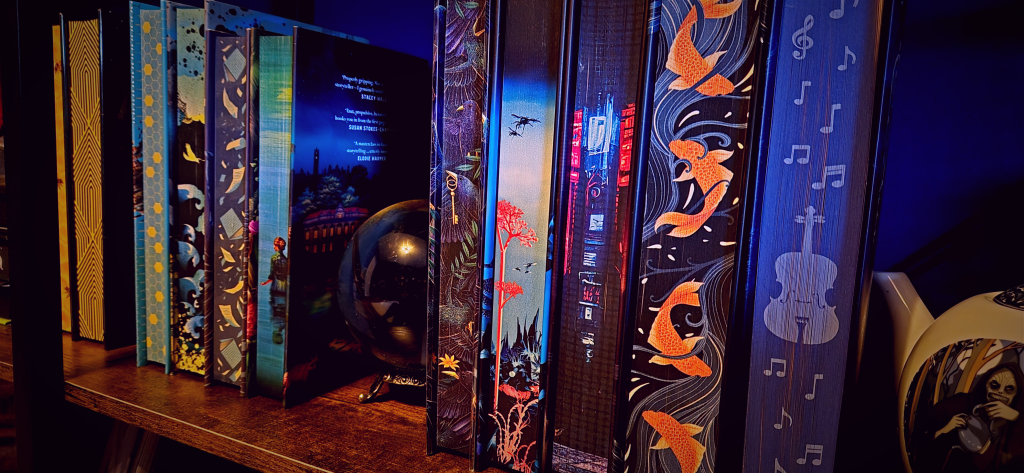
We all know how enticing those beautiful sprayed edges can be. From sumptuous solid colors to intricate hand painted and sprayed designs, decorated edges lend a colorful sense of whimsy and character to any library.
But where did this phenomenon begin? Is this a new phenomenon or did readers of the past have a thing for painted edges as well? I scoured the internet to find the answers, and they might just surprise you!
Today (2024) people spend countless dollars and hours seeking out the most prized and popular special editions of their favorite books. One of the most popular has been Divine Rivals by Rebecca Ross. The Fairyloot, Owlcrate, and Acrylipics editions are still in high demand.

In years past, especially prior to the 1500s, books were often stored horizontally. They were stacked with their fore-edge facing outward, which made them hard to identify. The remedy for this identification problem was to write the title on the edges or adorn it with a design. Once the practice of stacking books vertically with the spine facing outward became more popular, book binders began using the previously utilitarian designed edges to beautify their books.
According to the University of Adelaide, the earliest example of painted edges was a solid purple fore-edge, which was discovered on a book dating back to the 4th century BCE. It should be noted that up until the 1800s, purple and green were rare colors, and most edges were painted in red, ochre, and yellow.
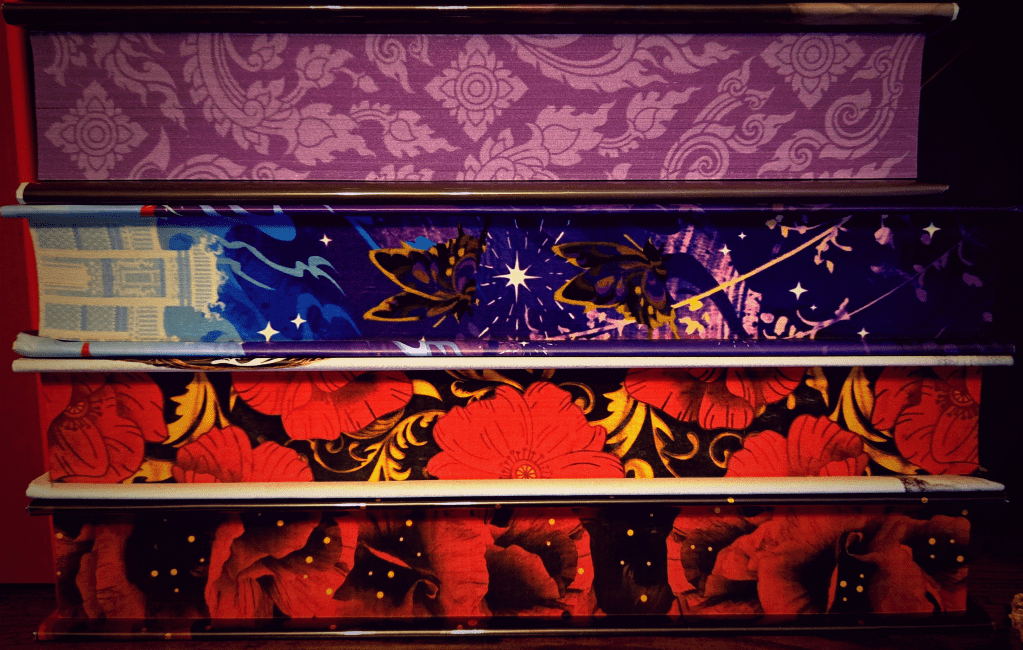
“The colour purple required logwood chips, some powdered alum and a piece of green copperas (green crystals of hydrated ferrous sulphate), which were boiled together with soft water.” -University of Adelaide
In the late 1800s, aniline dyes, synthetic dyes made from aniline pulled from coal tar, made the job of the book binders much easier. These dyes were commercially available and came in a variety of colors. Book binders simply applied the dyes to the edges using a sponge or brush.
“Historiae augustae scriptores. Isaac Casaubon. 1671. One of the early examples of marbled edges held in Rare Books & Special Collections..” -University of Adelaide
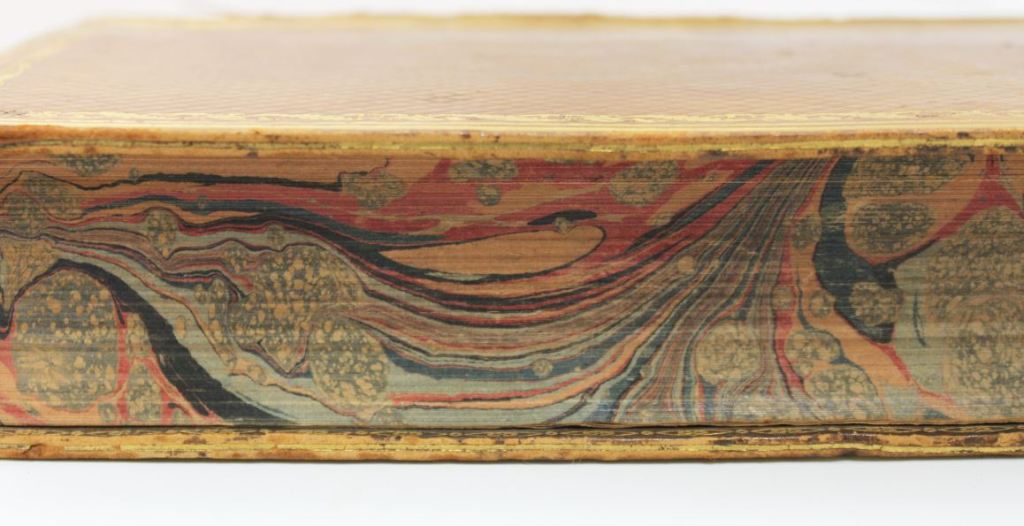
One of my favorite historic techniques is marbling. This technique was popular in the 1800s and book binders typically matched the edges with the endpapers. The designs were achieved using many different methods, from dip painting to using hydrochloric acid for some applications.
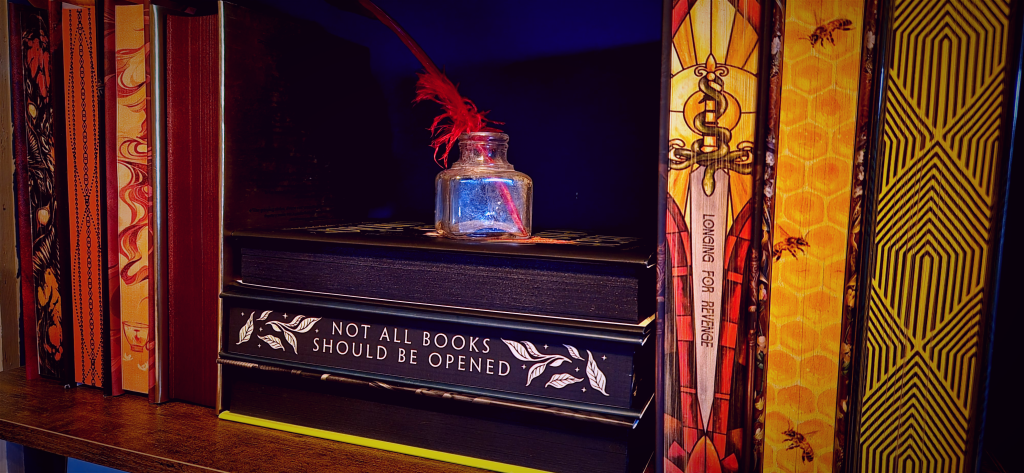
Today, painted and sprayed edges are created using acrylic, gauche, and watercolor paints.
So, do you like painted and sprayed edges? What are your favorite colors or special editions? Is there a particular store or artist you prefer? Let me know in the comments below!
Source: Cover to Cover: Exposing the Bookbinder’s Ancient Craft by Curator Lee Hayes, University of Adelaide. https://www.adelaide.edu.au/library/special/exhibitions/cover-to-cover/





 Temple of Dead Trees
Leave a comment